Quick answer
Elon Musk's Mars plan is to turn humanity into a multi-planetary species by building a fully reusable rocket system (SpaceX Starship), flying regular cargo and crew flights between Earth and Mars, and slowly growing a self-sustaining city of about one million people.
The roadmap looks like this:
- Build and iterate on reusable rockets (Falcon 1 → Falcon 9 → Falcon Heavy → Starship).
- Use Starship + Super Heavy booster to carry more than 100 people or over 100 tons of cargo per launch.
- Refuel in orbit, then send fleets of Starships during favorable Earth–Mars transfer windows.
- On Mars, build power, habitats, life-support, and local fuel production until the city can survive without Earth.
Is it guaranteed to happen exactly like this? No. But the engineering logic behind it is clear, and the method he uses—first-principles thinking, vertical integration, and brutal iteration—is something you can borrow for your own goals, even if you never touch a rocket.
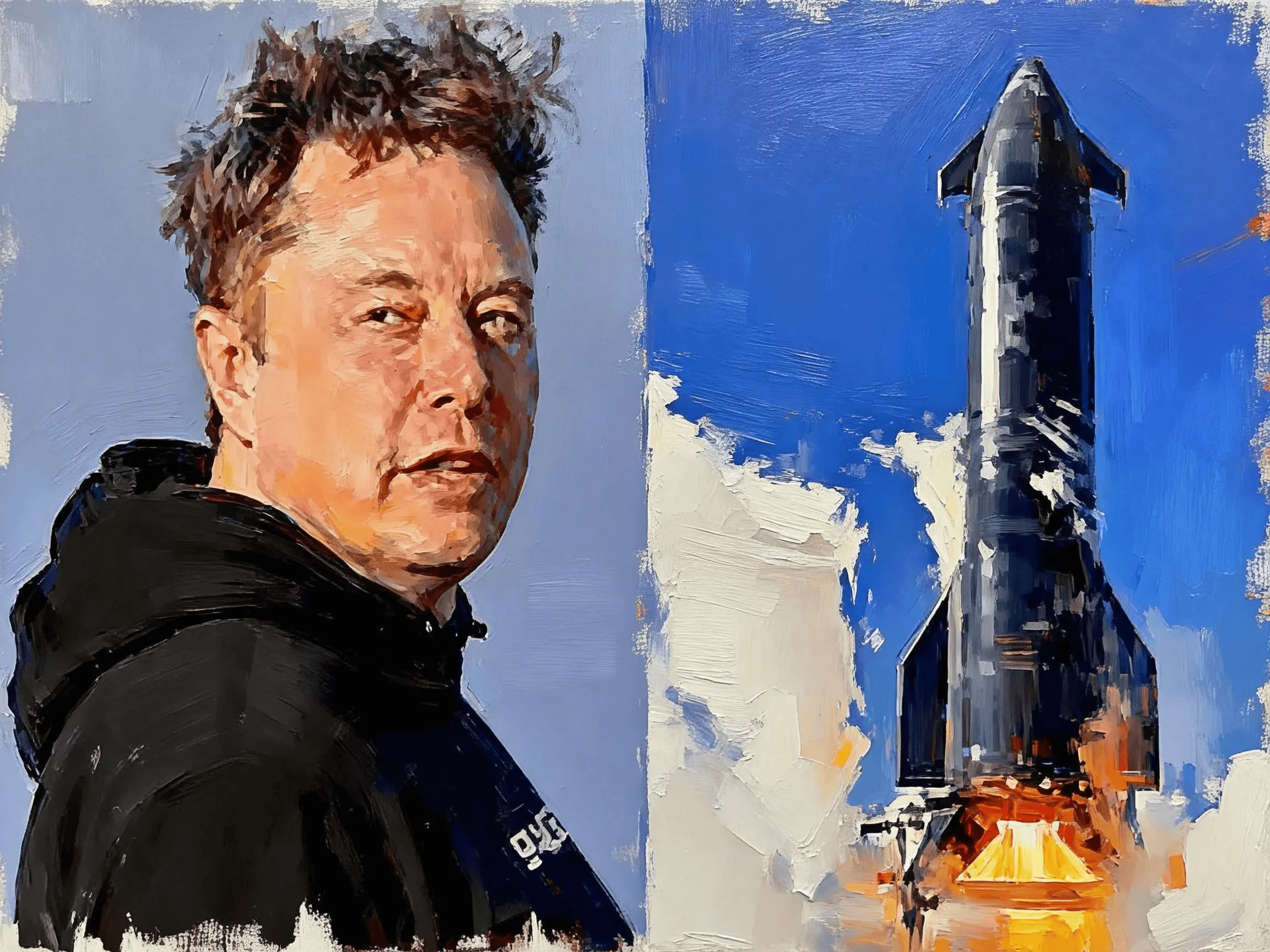
Why Mars, and why Elon Musk cares so much
If you listen to Musk for more than five minutes, one sentence comes up again and again:
"We should make life multi-planetary."
Under the drama and memes, there are some very sober reasons.
Mars as the "backup planet"
From a survival point of view, a single-planet civilization is fragile. The research you shared already lists the big ones:
- Large asteroid impacts.
- Nuclear war or other human-made disasters.
- Runaway climate problems.
- Unknown "black swan" events.
If everything we ever build lives on one world, a bad century could erase it.
Among all the places in our Solar System, Mars is the least bad option:
- It has sunlight. Solar power works there, just weaker than on Earth.
- There is water ice, locked in the soil and poles.
- The atmosphere is thin but made mostly of CO₂, which can be turned into fuel and oxygen with the right chemistry.
- A Martian day is about 24.6 hours, so human bodies and circadian rhythms have a chance.
So when Musk says "Mars", he is not just chasing a red postcard. He is trying to pick the one place where a long-term Mars colonization project is at least technically possible.
A very big, very specific goal
Musk's stated end goal is not "visit" Mars. It is:
- A self-sustaining city on Mars.
- Population target: around one million people.
That number is not random. Below that, a city depends heavily on Earth for machines, spare parts, and specialists. With around a million people, you start to have enough engineers, doctors, farmers, teachers, and builders to repair and rebuild most things locally.
Is this oversimplified? Of course. But it gives the project a clear scale: the rockets, factories, and launch cadence all work backward from that million-person picture.
How the Elon Musk Mars plan works in practice
From the outside, it looks like chaos and exploding prototypes. On paper, the Mars colonization roadmap is surprisingly structured. Your research already breaks it into stages; let’s walk through them in plain language.

1. Build the basic tool: reusable rockets
First, SpaceX had to prove it could even reach orbit at all.
- Falcon 1 – the small, scrappy test rocket. It almost killed the company before it finally worked.
- Falcon 9 – the workhorse, designed from the start to land and fly again.
- Falcon Heavy – three Falcon 9 cores strapped together, to lift heavier payloads.
The key idea here is a classic first-principles question:
"Why do we throw away rockets after one flight, when planes fly thousands of times?"
If you reuse the rocket, the cost per launch falls by an order of magnitude. That is essential, because you cannot build a city on Mars if each shipment costs the same as a small country's budget.
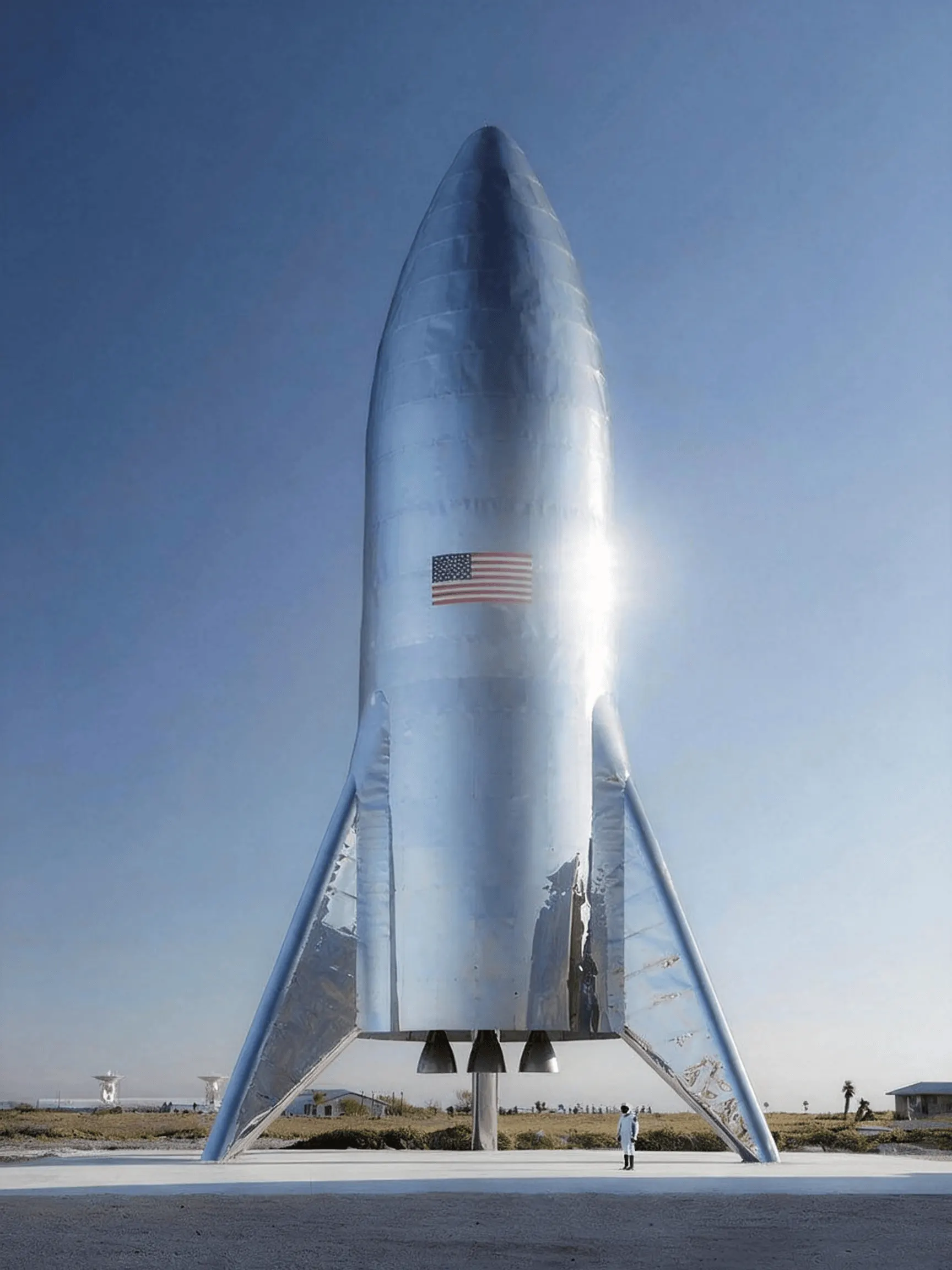
2. Design the Mars ship: Starship
All of that Falcon work leads to the current main character: Starship.
Starship is a two-stage system:
- Super Heavy booster – the lower stage that lifts Starship off Earth.
- Starship spacecraft – the upper stage that goes to orbit and, one day, to Mars.
On paper, Starship aims for:
- Fully reusable booster and ship.
- Payload capacity of around 100–150 tons to low Earth orbit.
- Room for 100+ people per flight in crewed versions.
Think of it as trying to build a long-haul airliner for space, not a one-off luxury rocket.
Of course, early Starship test flights have involved a lot of fire and twisted metal. But this is part of Musk's favorite pattern: fly, break, learn, rebuild. To traditional aerospace people, it looks reckless. To him, it is just fast iteration in hardware.
For a deeper technical look, SpaceX maintains a good overview on its own site: Starship | SpaceX.
3. Create a Mars transport system
Rockets alone are not a Mars plan. Musk talks about "Earth–Mars transport" like an airline schedule.
Key pieces:
- Launch windows: every ~26 months, Mars and Earth line up for more efficient flights.
- Orbital refueling: Starship launches to Earth orbit, fills up from tanker Starships, then heads to Mars fully fueled.
- Cargo first, people second: early flights are mostly equipment, shelters, power systems, and robots.
- Many ships per window: over time, you send fleets of Starships whenever the orbits are favorable.
This is where the math hurts a bit. To build a million-person city, you are not talking about dozens of launches, but thousands over decades. That is why cost per launch has to drop so sharply.
4. Build the first Mars base
Once the first Starships land on Mars, they will not be building shiny cities right away. The early to-do list looks more like a rough construction camp:
- Pick safe landing zones with access to ice.
- Deploy solar farms and possibly small nuclear reactors.
- Set up pressurized habitats (inflatable or rigid) for the first crews.
- Start ISRU (in-situ resource utilization): turning Martian CO₂, water, and soil into fuel, oxygen, and building materials.
- Grow food in greenhouses, first as experiments, later as large systems.
All of this appears in your research's checklist. It sounds grand, but at the ground level it is: air, water, food, energy, spare parts. The same four words every remote engineer worries about—just on another planet.
5. Grow from base to city
When does a base become a Mars city? There is no magic number, but Musk's outline offers a rough flow:
- First crews: engineers, scientists, builders.
- Growing infrastructure: power, life support, workshops, communication.
- Early services: medical care, basic education, farming, simple local manufacturing.
- More families: teachers, artists, farmers, people who are not "mission-critical" but are essential for real life.
- Self-sustaining loop: the city can handle long supply gaps from Earth without collapsing.
This is where we are the furthest from reality. Starship is still in testing. No cargo has landed on Mars yet. But the direction of the plan is clear: keep building until the Mars colony no longer feels like a fragile outpost.
For NASA's broader Mars context and science background, the official Mars Exploration Program is a great companion resource.
The method behind the Mars plan: first principles, integration, and iteration
Underneath the giant rockets, Musk's approach is built on a few mental tools that show up across SpaceX, Tesla, and beyond. Your reference articles went deep into these, especially first-principles thinking.
First-principles thinking: "from the atoms up"
Most of us solve problems by analogy:
- "Rockets have always been expensive, so they will stay expensive."
- "Batteries are costly, so electric cars must be luxury items."
Musk likes to ask a different question:
"If we forgot how this industry works and started from physics and materials, what would we build?"
That leads to moves like:
- Looking at a rocket and breaking it down into aluminum, titanium, copper, carbon fiber, electronics.
- Noting that raw materials are a small slice of the final rocket price.
- Deciding to design and build most parts in-house, then fly them again and again.
Your references about Tesla batteries tell the same story. People said, "Batteries are 600 dollars per kilowatt-hour, and that won't change." Musk and his team instead asked, "What is in a battery, and what do those items cost on the open market?" The gap between raw material prices and finished pack prices became an invitation to redesign the whole stack.
On Mars, first-principles questions sound like:
- "What is the minimum we need to keep a human alive here for one day?"
- "Which things must come from Earth, and which can we extract from Mars itself?"
- "What is the cheapest way to move one kilogram from Earth to Mars if we can fly the same ship hundreds of times?"
Vertical integration: build your own tools
Traditional aerospace is very outsourced and layered. Different companies make different parts; everything is certified slowly; costs stack up like Lego bricks.
SpaceX took a very different path:
- Design and build its own engines (Merlin, then Raptor).
- Run its own factories, test stands, and launch sites.
- Write its own software and control systems.
- Put engineering teams from different disciplines under one roof and one Slack thread.
This is not comfortable. It makes the company carry more risk and more stress. But it also lets them:
- Change designs quickly.
- Cut out layers of supplier markup.
- Share information directly between people who design, build, and fly the hardware.
On Mars, a city will need the same spirit. You cannot wait nine months for a spare part to arrive from Earth. You will need local machine shops, 3D printers, greenhouses, and labs, all talking to each other.
High-speed iteration: "fly, fail, learn, repeat"
You saw this clearly in the research: the SN-series Starship prototypes that flew, tumbled, and exploded.
Old-school spaceflight tried to do all the testing on the ground, then fly once everything looked perfect. SpaceX tends to:
- Build something that might work.
- Fly it.
- Watch what breaks (publicly, on livestreams).
- Change the design and fly again.
This model hurts the ego. It also compresses years of learning into a handful of flights.
Of course, there are real limits. You cannot treat astronaut safety like a casual A/B test. There is a reason cargo flights come first. But as a way to explore a huge design space quickly, fast iteration plus honest post-mortems is powerful.
What we can learn from the Mars plan for our own goals
Most of us do not run rocket companies. You might be building a side project, a small studio, or simply trying to change your own habits. So what does any of this have to do with you?
Your research already hinted at a three-step model we can borrow.
1. Choose a bold, honest goal
"Bold" does not have to mean "interplanetary". It means:
- Large enough that you will still care about it in ten years.
- Meaningful enough that it rearranges your daily choices.
- Specific enough that you can tell if you are moving toward it.
"Make life multi-planetary" is Musk's version.
Your version might be "write one novel", "build a calm app studio", or "have a debt-free family life". The content changes, but the emotional weight is similar: it scares you a little and wakes you up a lot.
If you like this way of thinking about goals, our earlier post CanGoal — a very cute and efficient goal management app shows how we turn long-term goals into gentle daily steps.
2. Decompose the problem
Once there is a big headline goal, Musk and his teams go into decomposition mode:
- For Mars: propulsion, energy, life support, radiation, cost, psychology.
- For Tesla: batteries, motors, factories, software, charging networks.
You can do the same:
- Take a page in your notebook.
- Write your big goal at the top.
- List the few core problems that must be solved for it to work.
Try to avoid vague items like "get better". Go for things like "talk to ten early users", "ship one tiny feature", or "save fifty dollars a week".
If you want a calm design lens on this process, our post CanStudio App Ecosystem introduces how we break life moments into small, focused tools, and Designing With Stillness shows how we keep interfaces soft even when the goals are intense.
3. Iterate quickly and kindly
Then comes the hardest part: doing the work over and over without burning out.
Musk often runs himself—and people around him—at a pace that many would find painful. You probably do not need that level of chaos in your life.
But the core idea still helps:
- Take small, visible steps.
- Get real feedback instead of only reading theory.
- Adjust your plan instead of defending your old one.
In simple terms: "fly, fail a bit, learn, try again". You can apply that to a new feature, a new habit, or a new way of organizing your week.
Is Elon Musk's Mars plan realistic?
A fair question, and one that does not have a clean yes/no answer yet.
Things that support the plan:
- Reusable rockets are real. Falcon 9 has flown and landed many times.
- Starship test flights have already reached space and continue to improve.
- SpaceX has a commercial business model (launches, Starlink) that helps fund long-term projects.
Things that push back:
- Mars is brutally hostile: thin air, cold temperatures, radiation.
- The cost and risk of building a Mars city are still hard to calculate.
- Human bodies and minds may react badly to long-term low gravity and isolation.
- Politics, regulations, and public opinion can slow everything down.
The most honest statement today is:
The Elon Musk Mars plan is technically plausible in pieces, financially and socially uncertain as a whole, and emotionally polarizing.
You do not have to love or hate it. You can simply treat it as one serious attempt to answer a big question: "What if we tried to take human life off-world, for real?"
Call to action: bringing the Mars mindset back home
If reading about Mars woke up a small, stubborn part of you, that is good news. You do not need a launch pad to use that energy.
Here are a few gentle next steps:
- Name one bold goal in your own life that still feels a bit "sci-fi".
- Decompose it into a handful of concrete problems you can actually work on.
- Pick one tiny experiment you can run this week—something you can finish in under an hour.
If you enjoy thoughtful tools that support this kind of long-term thinking, explore our other stories in the blog and try the apps we build around goals, time, and reflection. Your Mars might just be a calmer, more honest version of daily life—and that is already a beautiful mission.
FAQ about Elon Musk's Mars plan
When does Elon Musk think humans will land on Mars?
Musk has mentioned optimistic timelines like the mid-2020s, but reality keeps reminding us that rockets are hard. With current progress, a crewed Mars mission is more likely in the 2030s or later, depending on Starship's success, funding, and international cooperation.
How will people breathe and live on Mars?
Short term, crews will live in pressurized habitats, breathing air made on-site from Earth-supplied oxygen and Martian resources. Water comes from ice in the soil, and power from solar farms and possibly compact nuclear reactors. Over many years, the goal is a network of habitats, farms, and workshops that can recycle air and water many times.
Is Mars colonization only for the rich?
Early missions will involve highly trained crews, chosen more for skills than money. Tickets will not be cheap at the beginning. Musk has said he wants the long-term price of a one-way ticket to be closer to the cost of a small house, not a billionaire toy. Whether that happens will depend on how far costs fall and how much governments participate.
What is the role of NASA and other space agencies?
NASA already works with SpaceX on missions like Crew Dragon and has selected a version of Starship for Artemis lunar landings. For Mars, NASA focuses more on science missions and technology (rovers, orbiters, life-detection instruments), while SpaceX pushes the large-scale transport side. Over time, you can expect a mix of public–private cooperation and healthy tension.
What happens if the Mars plan fails?
Even if we never see a million-person Mars city, the work already drives:
- Cheaper access to space.
- Better rockets, engines, and materials.
- New ways to think about energy, automation, and manufacturing.
In that sense, the Mars plan is like a lighthouse. Even if you never reach it, it still changes how you steer.
How can I learn more about Elon Musk's Mars vision?
Good starting points include:
- The official Making Life Multiplanetary page from SpaceX.
- NASA's Mars Exploration Program for science and mission history.
- Long-form interviews where Musk explains his thinking in his own words, such as his TED conversations.
And of course, you can keep an eye on each Starship test flight—every loud, messy launch is one more data point on whether this giant bet might actually work.