China vs U.S. New Year's resolutions in 2026
Every January, people in both countries try to reset their lives. Different culture, different pressure, same human feeling: "I want this year to go better than the last one."
This comparison uses two charts to look at where goals overlap and where they diverge. One chart covers U.S. responses, and the other shows China-focused trends.
Data source: yougrov
The big picture in one sentence
Both audiences prioritize personal improvement, but the emphasis shifts: health and emotional wellbeing remain core in the U.S., while practical life progress and stability signals stand out more clearly in China.
U.S. 2026 resolution priorities
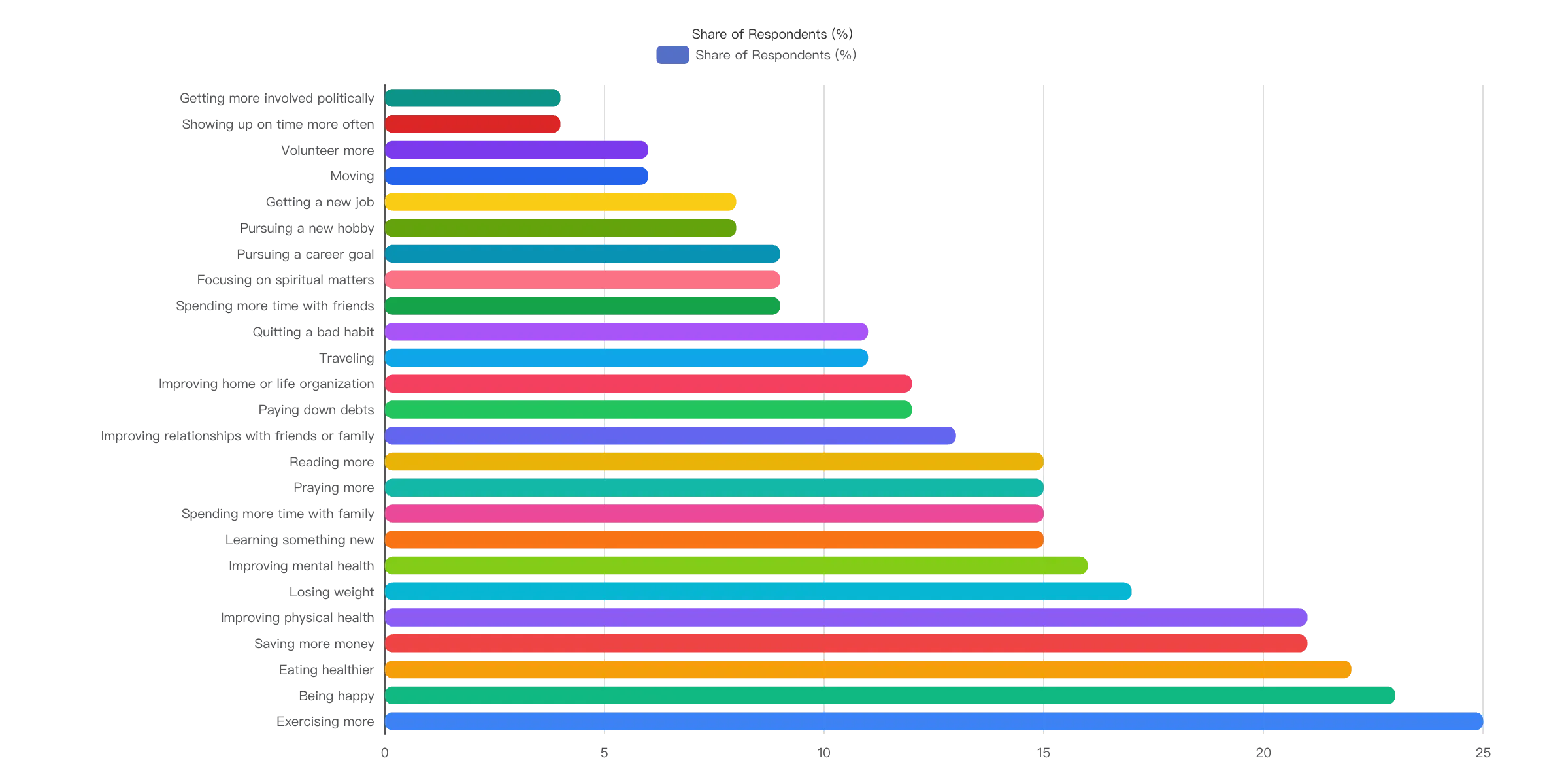
From the U.S. chart, health-forward goals still lead:
- Exercise more
- Eat healthier
- Improve physical health
- Improve mental health
- Lose weight
Money and happiness also rank high, which reflects daily reality: people are not only trying to "look better," they are trying to feel better and live with less financial stress.
An interesting point in the U.S. data is confidence. Many people believe they can keep their resolutions, at least when the year begins. That optimism is powerful, but it fades fast when goals stay vague.
China 2026 resolution priorities
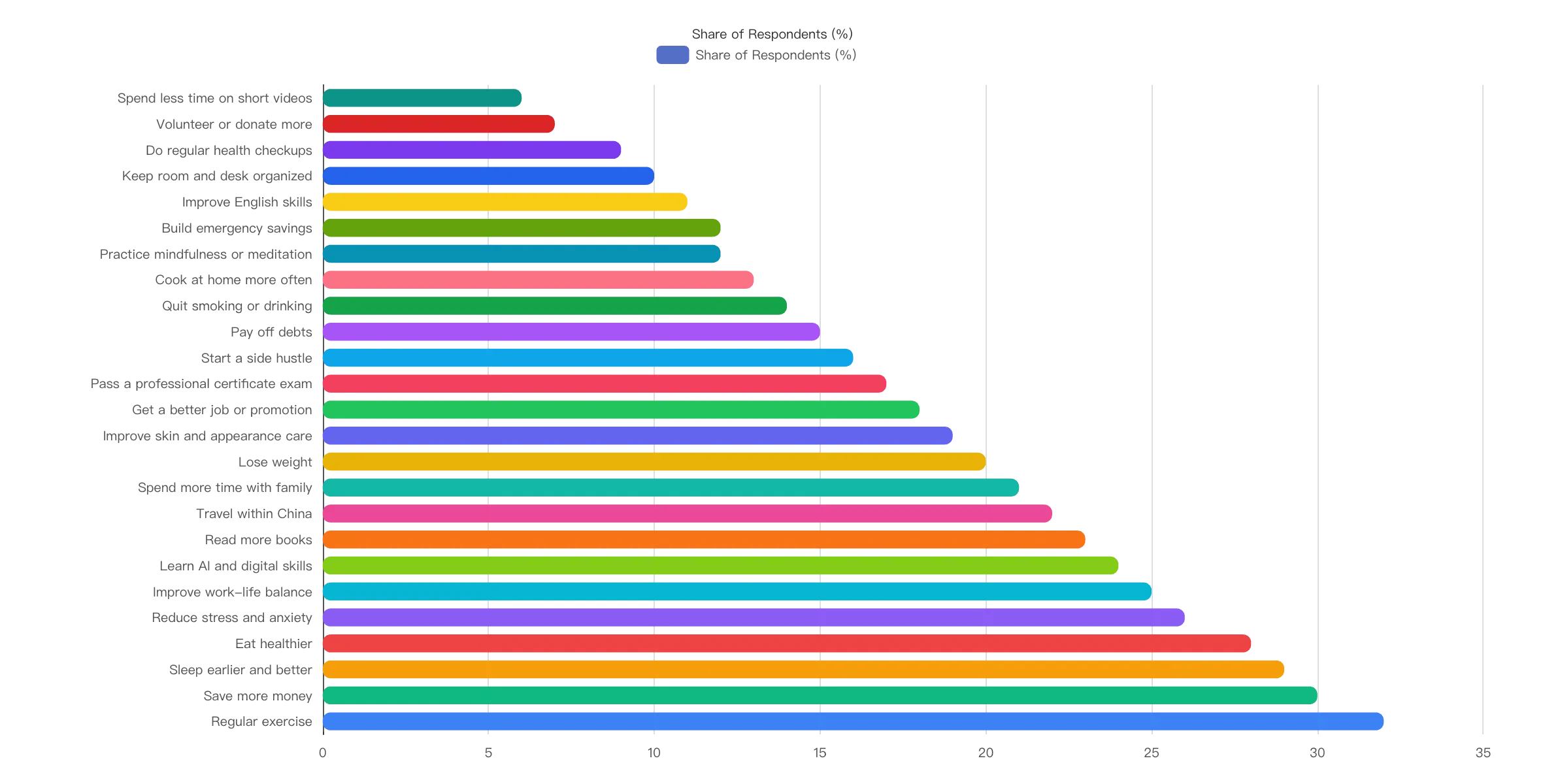
The China chart highlights a more results-first planning style. While health still matters, there is stronger visible weight on practical advancement themes, such as:
- Financial improvement
- Career and skill growth
- Family and life stability
- Sustainable self-management habits
In simple terms, many goals read less like "new year inspiration" and more like "this needs to be solved this year." It feels grounded, direct, and action-oriented.
Where China and the U.S. align
Despite different emphasis, the overlap is large:
- Better health remains central in both markets.
- Financial pressure shapes goal choices in both markets.
- People want goals that improve day-to-day life, not abstract status.
So this is not a story of opposite priorities. It is a story of shared needs, expressed in different language.
Why this comparison matters for goal-setting
If you build products, content, or coaching for productivity users, this difference matters:
- U.S. messaging can lead with wellbeing plus sustainable routines.
- China messaging can lead with progress, structure, and visible outcomes.
- In both cases, users respond better to specific, measurable next steps.
Think of it like choosing a map style. Some people want scenic routes. Some want fastest arrival. Both still need a clear destination and a road that is actually drivable.
A practical framework that works in both countries
No matter which chart feels closer to your audience, the same execution model works:
- Pick one major goal and one support goal.
- Turn each goal into weekly actions.
- Define a visible metric for progress.
- Review once per week and adjust.
- Keep friction low so actions are easy to repeat.
Example:
- Goal: Improve health.
- Weekly action: 3 workouts and 5 home-cooked dinners.
- Metric: number of completed sessions per week.
- Review: Sunday night reset.
That is less exciting than a dramatic "new year, new me" speech. It is also far more likely to survive real life.
Final takeaway
China and the U.S. may phrase 2026 resolutions differently, but both groups are asking for the same thing: a better year they can feel, not just imagine.
If you want better follow-through, keep goals specific, measurable, and easy to act on this week. Motivation starts the process. Clear systems carry it.