The Complete Guide to Goal-Seek Prompting: How to Make AI Build Your Personal Action Plan (2026 Edition)
Have you ever opened ChatGPT or Claude with a burning desire to change your life—"I want to get fit," "I want to launch a side project," or "I want to master Japanese"—only to receive a generic 25-bullet-point textbook summary that makes you feel more overwhelmed than when you started?
You close the tab. You feel guilty. You think: "I guess I’m just bad at prompt engineering."
Here is the truth: Your prompting skills are not the problem.
The problem lies in a fundamental flaw of traditional prompting: it expects you to know all the answers before you even start. Traditional prompt engineering forces you to define every constraint, lifestyle factor, baseline skill, and edge case up front. But if you already had that level of clarity, you wouldn’t need AI to help you plan in the first place.
Enter Goal-Seek Prompting (originally conceived as ゴールシークプロンプト in Japan by AI researcher Shunsuke Hayashi). Instead of you guessing what instructions to give the machine, Goal-Seek Prompting reverses the relationship 180 degrees: the AI becomes the interviewer, and you simply answer its diagnostic questions.
In this 2026 guide, we'll break down how Goal-Seek Prompting works, provide the master copy-paste template, and show you how to connect your AI-generated action plan directly to real-world execution with CanGoal.
Traditional Prompting vs. Goal-Seek Prompting
To see why this approach works so well, compare the cognitive load of both methods:
| Dimension | Traditional Prompting | Goal-Seek Prompting |
|---|---|---|
| Who asks questions? | Human asks, AI answers | AI asks, Human answers |
| Cognitive burden | High: Human must specify constraints, role, format | Low: Human only provides the rough goal |
| Output accuracy | Generic advice or overwhelming "to-do lists" | Tailored, personalized step-by-step roadmap |
| Handling uncertainty | Fails when you don't know what you don't know | Draws out hidden obstacles and real constraints |
| Best suited for | Simple lookups and known formulas | Goal setting, planning, habit design, brainstorming |
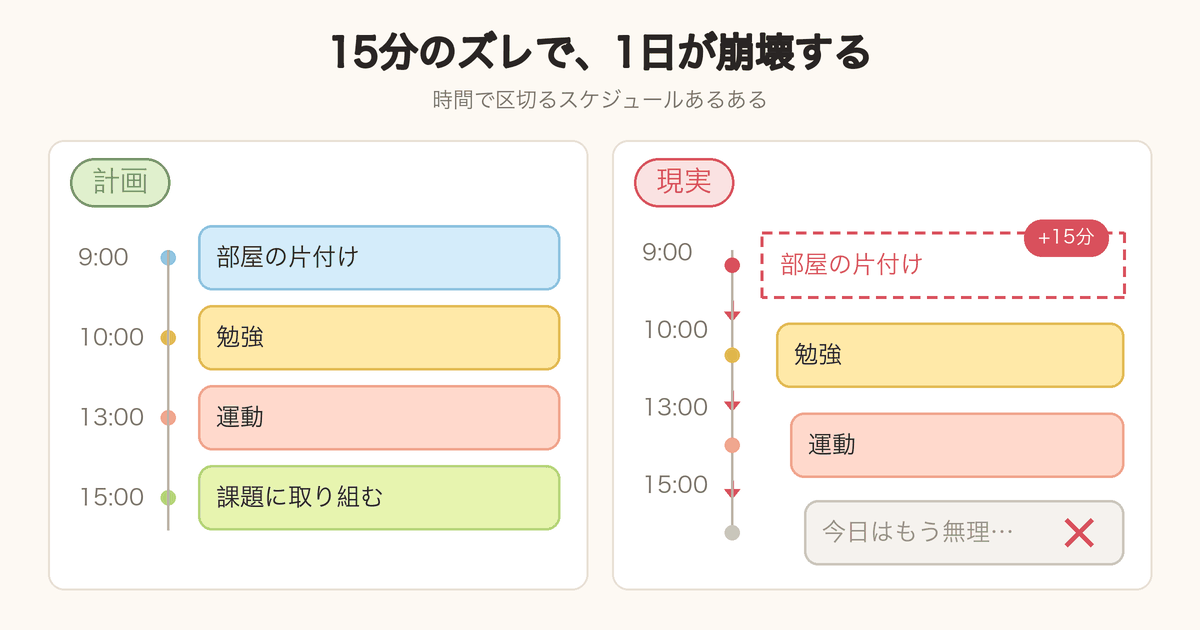 When you try to map out a massive plan in one go, reality derails it. Goal-Seek prompting breaks the cognitive logjam before you hit overwhelm.
The Master Template (2026 Edition)
Copy and paste the prompt below into ChatGPT, Claude, or Gemini:
You are an expert personal strategist and goal architect.
Your mission is to work collaboratively with me to build the most realistic, sustainable, and actionable plan for my goal.

First, ask me: "What is the goal or project you want to tackle?"

Once I provide my initial goal, do NOT immediately jump to a full plan. Instead, reply with exactly these three sections:

A. Revised Goal & Strategy
Present an improved, crisp version of what I want to achieve, phrased in a clear and motivating way.

B. Strategic Considerations
Briefly highlight 2–3 blind spots, trade-offs, or lifestyle constraints we should account for (e.g., energy levels, existing habits, realistic timelines).

C. 3 Diagnostic Questions
Ask me exactly 3 targeted questions to uncover the missing details you need to tailor this plan specifically to my daily life (e.g., available hours, previous failure points, preferred working style).

Once I answer your questions, repeat this iterative loop: update section A, provide new suggestions in B, and ask follow-up questions in C if needed. When we reach clarity, output a step-by-step milestone roadmap broken into bite-sized daily actions.
The 3-Step Iteration Loop in Action
Let’s look at an actual exchange to see how a vague goal transforms into a bulletproof plan in just two rounds.
Round 1: You state your raw intention
You: "I want to run a half-marathon in six months, but I haven't run regularly in three years and I have a demanding 9-to-6 job."
Round 2: The AI conducts the diagnostic interview
AI:
A. Revised Goal & Strategy
"Build baseline cardiovascular fitness and progressive aerobic endurance over 24 weeks to comfortably complete a half-marathon without injury or burnout."B. Strategic Considerations
1. High risk of overuse injury if weekly mileage spikes too early after a 3-year hiatus.
2. Weekday evening fatigue will likely sabotage long runs; morning or weekend anchor sessions will yield higher consistency.C. 3 Diagnostic Questions
- How many days per week can you realistically lace up your shoes for 30–40 minutes without stress?
- Do you have access to a treadmill, or will all sessions take place outdoors regardless of weather?
- What caused you to stop running three years ago (e.g., boredom, shin splints, schedule changes)?
Round 3: You give short, low-friction answers
You: "1. Three days max during the week, plus Saturday. 2. Outdoors only. 3. I got shin splints because I tried running 5 miles on week one."
In less than two minutes, the AI has discovered your true weekly capacity, environment, and past injury trigger. The resulting plan won't be an unrealistic pro-athlete regimen—it will be a gentle, durable routine customized to your exact reality.
Why 2026 AI Models Make Goal-Seeking Even More Powerful
When Shunsuke Hayashi first introduced this technique in 2022, earlier models tended to suffer from context drift after three or four rounds of back-and-forth questioning.
In 2026, next-generation reasoning models have supercharged this workflow:
- Long-Context Memory & Reasoning (GPT-5 & Claude 3.7 Sonnet): Modern models maintain every nuance of your answers across dozens of turns. If you mention in Turn 1 that you have bad knees, the final Month 3 plan will automatically replace high-impact jumping jacks with low-impact alternatives.
- Structured Execution & Agentic Coding (Claude Code & Cursor): Goal-Seek Prompting works beyond personal fitness. Developers use it for system architecture: "I want to build an iOS app that syncs Core Data with CloudKit." The AI asks about background fetch frequency, error boundaries, and sandbox entitlements before generating a single line of Swift.
- Multimodal Diagnostics (Gemini 3): You can snap a photo of your messy desk, your current handwritten calendar, or a workout log, attach it to your goal-seek prompt, and say: "Here is my current reality. What should I change first?"
Bridging the Gap: From Prompt Output to Real-World Momentum
A brilliant conversation with Claude or ChatGPT produces insight. But insight alone doesn’t lace up your running shoes or write your first chapter.
This is where most productivity systems collapse:
- The To-Do List Trap: You copy 30 action items into a standard checklist app. By Wednesday, you have 14 overdue red badges, triggering guilt and task avoidance.
- The Rigid Calendar Trap: You block 6:00 AM to 7:00 AM on Google Calendar. One night of poor sleep ruins the block, and the entire domino chain falls over.
The CanGoal Philosophy: Containerize Your Goals into "Cans"
In CanGoal, we approach execution differently:
[Vague Aspiration]
       │
       ▼ (Goal-Seek Prompting)
[3 Targeted Questions & Milestone Plan]
       │
       ▼ (CanGoal Containerization)
[Goal Can: "Half Marathon 2026"]
   ├── 🥫 Bite-sized task: "15-min warm-up jog"
   ├── 🥫 Bite-sized task: "Dynamic calf stretch"
   └── 🥫 Bite-sized task: "Buy cushioned running socks"
Instead of chaining tasks to strict clock times, you pour your AI-generated subtasks into Goal Cans:
- Zero Clock Guilt: Did a meeting run late? It doesn't matter. Progress in your Goal Can stays safe. You don't fail a time block; you just pick up the can when you're ready.
- Bite-Sized Dopamine: Every small milestone feeds your CanFriend companion, transforming dreaded discipline into friendly momentum.
- Buyout Freedom: No recurring monthly subscription tax eating at your budget while you build your habits.
 Progress feels better when you are cheered on by companions rather than scolded by red overdue badges.
Level Up: Automating Your Goal Wizard with CanGoal MCP
For developers and power users on macOS, CanGoal takes Goal-Seek Prompting one step further. CanGoal features a native Model Context Protocol (MCP) Server.
Instead of manually copying tasks from ChatGPT back into an app:
- You open Claude Desktop or Cursor configured with CanGoal MCP.
- You run the built-in prompt:
/prompts get create_goal_wizard {"theme": "half marathon"} - Claude automatically inspects your existing active goals in CanGoal, suggests an optimal template, and interviews you using the Goal-Seek method.
- Once you approve the final milestones, Claude calls the
create_goalandcreate_tasktools—instantly writing your personalized plan directly into CanGoal's local Core Data database.
Frequently Asked Questions
Can I use Goal-Seek Prompting with free versions of ChatGPT or Claude?
Yes, absolutely. The master template works seamlessly on the free tiers of ChatGPT, Claude, and Gemini. Paid tiers (such as GPT-5 or Claude Pro) offer deeper reasoning and handle longer multi-turn interviews with greater fidelity, but the core logic is universal.
How is Goal-Seek Prompting different from the Fukatsu-Style (深津式) prompt?
The popular Fukatsu-style prompt focuses on assigning roles and hard constraints up front (e.g., "Act as a senior marketer, obey rules X, Y, Z"). It assumes you already know the necessary constraints. Goal-Seek Prompting assumes you don't know what constraints are missing, and instructs the AI to pull them out of you. Combining them—using Fukatsu constraints for the AI's persona while using Goal-Seek for the interaction loop—is the most effective technique.
What should I do if the AI asks too many questions at once?
Always constrain the question count in your prompt (as shown in our master template: "Ask me exactly 3 targeted questions"). If an AI asks 10 questions at once, the cognitive friction returns. Three questions is the psychological sweet spot for quick, thoughtful answers.
Start Your First Goal-Seek Session Today
You don't need a pristine 10-page life plan to start moving forward. You only need the courage to state your messy, unpolished ambition and let the AI ask the right first question.
- Copy the Master Prompt above into your favorite AI tool.
- Answer the 3 questions truthfully.
- Put the resulting tiny steps into CanGoal and collect your first milestone today.